
Directed by Laura Mulvey and Peter Wollen • Drama • With Dinah Stabb, Merdelle Jordine, Rhiannon Tise • 1977 • 92 minutes
Laura Mulvey, author of the seminal essay Visual Pleasure and Narrative Cinema, helped to establish feminist film theory as a legitimate field of study. With Peter Wollen, she directed one of the most visually stimulating, theoretically rigorous films to emerge from the 1970s. RIDDLES OF THE SPHINX is a landmark fusion of feminism and formal experimentation that seeks to create a non-sexist film language. Its title figure, the legendary creature of antiquity, terrorized Thebes and self-destructed only after Oedipus correctly answered her riddle. Invoking and challenging traditional interpretations of the Oedipus story as a movement from matriarchal culture to patriarchal order, the film also probes representation in film itself. The central narrative section, about Louise, a middle-class woman, and her four-year-old daughter Ana, is an inquiry into the arbitrary nature of conventional film techniques that captures Louise's struggles with motherhood in a patriarchal society.
Up Next in Women's History Month 2026
-
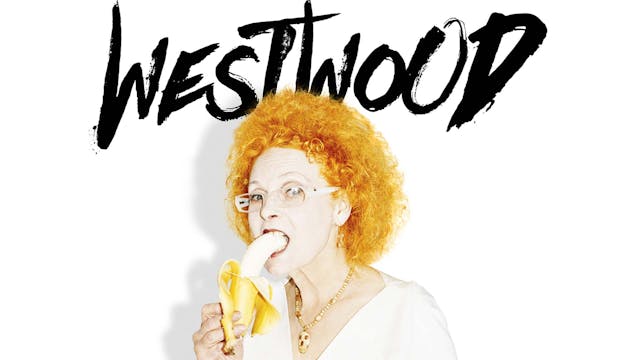
Westwood: Punk. Icon. Activist.
Directed by Lorna Tucker • Documentary • With Vivienne Westwood • 2018 • 79 minutes
An intimate and inspiring portrait of a true icon: Dame Vivienne Westwood. Punk Rock’s Grande Dame and one of the most culturally influential provocateurs in recent history.
After defining the 1970s punk look wi...
-
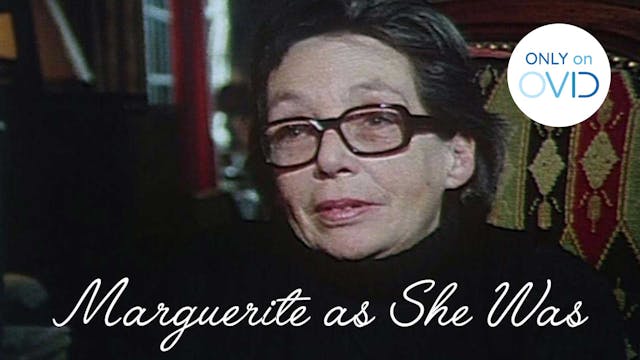
Marguerite as She Was
Directed by Dominique Auvray • Documentary • With Marguerite Duras, Jeanne Balibar • 2003 • 61 minutes
Marguerite Duras (1914-1996) - best-known as the author of The Lover and for the screenplay for Hiroshima, Mon Amour (the classic 1960 New Wave film directed by Alain Resnais) - was one of the ...
-
Althea
Directed by Rex Miller • Documentary • 2014 • 83 minutes
Althea Gibson broke records on and off the tennis court. A truant from the rough streets of Harlem, Gibson emerged as a most unlikely queen of the highly segregated tennis world in the 1950s. A sharecropper's daughter, Gibson's family migr...